Afghan Bolani Recipe: Toasty Veggie-Stuffed Flatbread

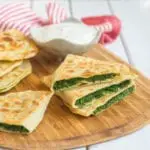
Toasty and golden on the outside, tender inside, and packed with savory vegetables, Afghan bolani is a stuffed flatbread that makes it very easy to eat “just one more.”

Read time:

7–10 minutes
Originally posted in 2017, updated August, 2026

Bolani has been one of my favorite discoveries from exploring foods around the world. I haven’t had the opportunity to visit Afghanistan, so my introduction to this savory stuffed flatbread happened in my own kitchen, where I tried versions filled with both spinach and potatoes.

Both are tasty, but if you make me choose, I’m going for the spinach. Add that garlicky yogurt sauce for dipping, and I’m very happy indeed.

This recipe makes six thin, pan-cooked flatbreads and includes instructions for either a spinach and cilantro filling or a potato, cilantro, and green onion filling.

Why you’ll love this Afghan bolani recipe

  • Two filling options: Choose savory spinach and cilantro or hearty potato.
  • Toasty outside, tender inside: Rolling the dough thin gives bolani its wonderful texture.
  • Make-ahead friendly: Prepare the dough and filling ahead, then assemble and cook when you’re ready.
  • Perfect for sharing: Cut the finished flatbreads into wedges and serve them with yogurt sauce for dipping.

What is bolani?

Bolani is an Afghan stuffed flatbread made by rolling dough thin, adding a savory filling, folding and sealing it, and cooking it until the outside becomes golden.

Fillings vary and may include ingredients such as potatoes, leeks or green onions, spinach, lentils, pumpkin, fresh herbs, and chilies.

My version gives you two filling choices: a spinach and cilantro mixture or a potato filling with cilantro and green onions or leeks.

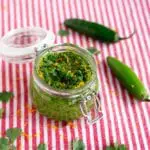
Garlic yogurt and fresh herb chutneys make especially tasty accompaniments.

Bolani can be enjoyed as a snack or side dish, sold as street food, or prepared at home for meals and gatherings. It is also associated with hospitality and special occasions, including celebrations such as Nowruz and meals during Ramadan.

So many choices!

Like many traditional foods, bolani isn’t limited to one single filling or formula. Regional versions from different parts of Afghanistan use ingredients ranging from potatoes and onions to greens, legumes, and fresh herbs.

That flexibility is part of what makes this dish so fun. There isn’t one filling you have to use. The basic idea of thin dough wrapped around a flavorful filling leaves plenty of room for different ingredients, family traditions, and personal experimentation. 

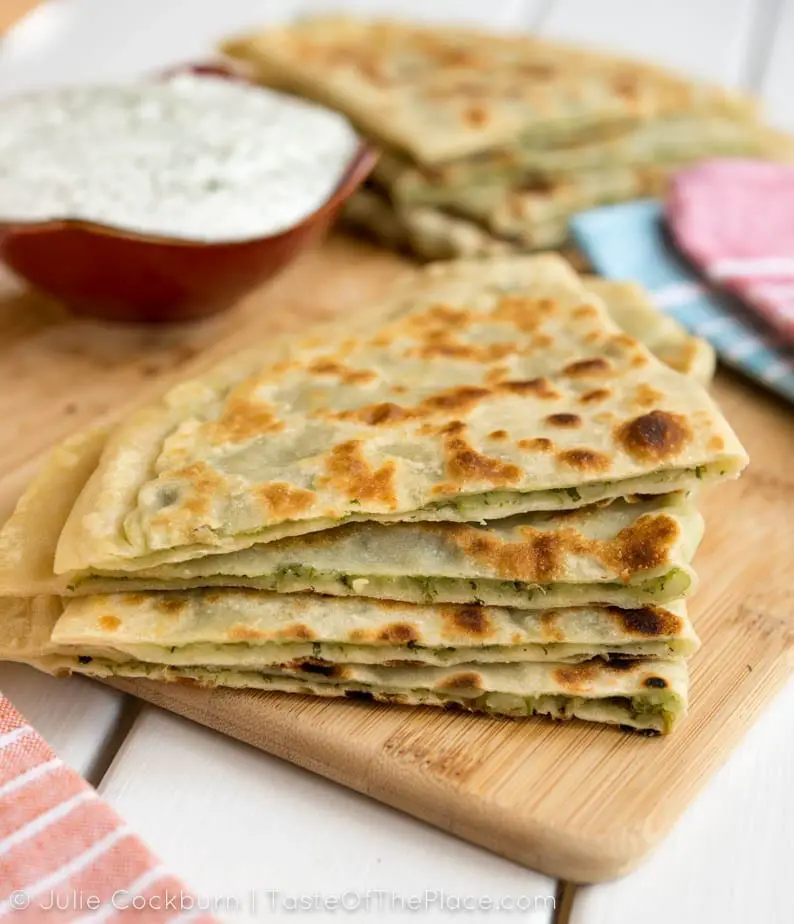
Potato stuffed Afghan Bolani with yogurt dipping sauce in the background.
These are my potato-stuffed bolani.

Key ingredient overview

All-purpose flour

The dough is intentionally simple. All-purpose flour gives you a soft dough that can be rolled quite thin without becoming overly delicate.

Spinach

For the green filling, fresh spinach is briefly wilted and drained before being combined with cilantro and green onions or leeks. Prefer to use frozen spinach? Go for it! Just thaw and drain well before mixing. Get as much water out as you reasonably can. A very wet filling makes the bolani harder to seal and can make the flatbread soggy.

Potatoes

Use potatoes that mash easily once boiled – russets are a good choice. You want them mostly smooth, but still with a little texture rather than whipped into a completely smooth puree.

Green onions or leeks

Either works in this recipe. Use whichever you have available.

Cilantro

Fresh cilantro brings loads of flavor to both fillings. I use both the tender stems and leaves rather than tossing all those perfectly good stems.

Jalapeño

The jalapeño is optional. Leave it out for mild bolani, or add it if you want a little heat. And feel free to go with spicier chilies if you like. You can also add in crushed red pepper if that’s what you have on hand.

Olive oil

A little olive oil goes into the dough and filling, and more is brushed onto the bolani before cooking to help create that golden exterior.

Greek yogurt

The dipping sauce combines Greek yogurt with garlic, ground coriander seeds, dill, and salt. I highly recommend it! That cool, garlicky sauce is a fantastic contrast to the hot, toasty flatbread. Plain, regular yogurt works well, too, but you’ll want to use less, or even no water, to thin it.

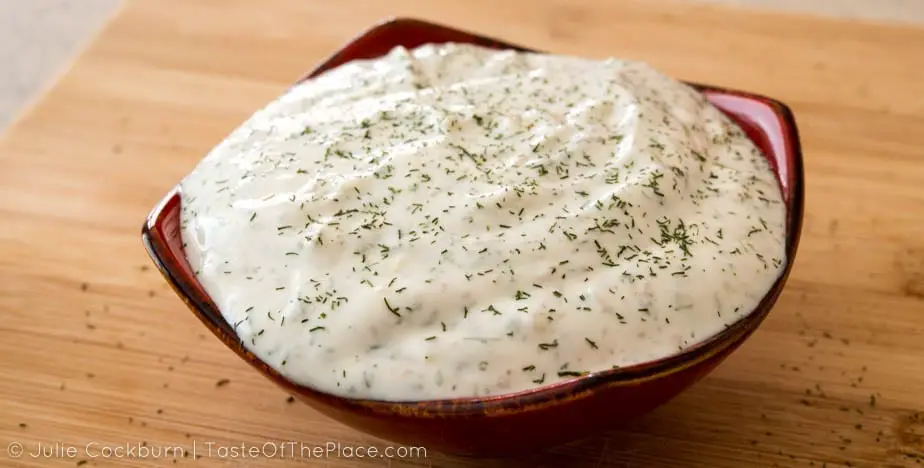
Yogurt Sauce for Afghan Bolani.

How to make bolani

The full measurements and instructions are in the recipe card below, but here are the basics.

  1. Make the yogurt sauce. Mix the yogurt with garlic, ground coriander seeds, dill, salt, and enough water to create a smooth dipping consistency.
  2. Make and rest the dough. Combine the flour, salt, olive oil, and enough water to create a smooth, soft dough. Knead it well, then let it rest.
  3. Prepare your filling. Choose either the spinach and cilantro filling or the potato filling and season it generously.
  4. Roll the dough. Divide it into six pieces and roll each piece into a thin round about 8 inches across.
  5. Fill and seal. Spread about 1/3 cup of filling in a thin layer over half of each round, leaving the edge clear. Fold the dough over and seal the edges.
  6. Cook until golden. Brush each bolani with olive oil and cook it on a hot skillet or griddle until browned on both sides.
  7. Serve hot with plenty of garlicky yogurt sauce for dipping.
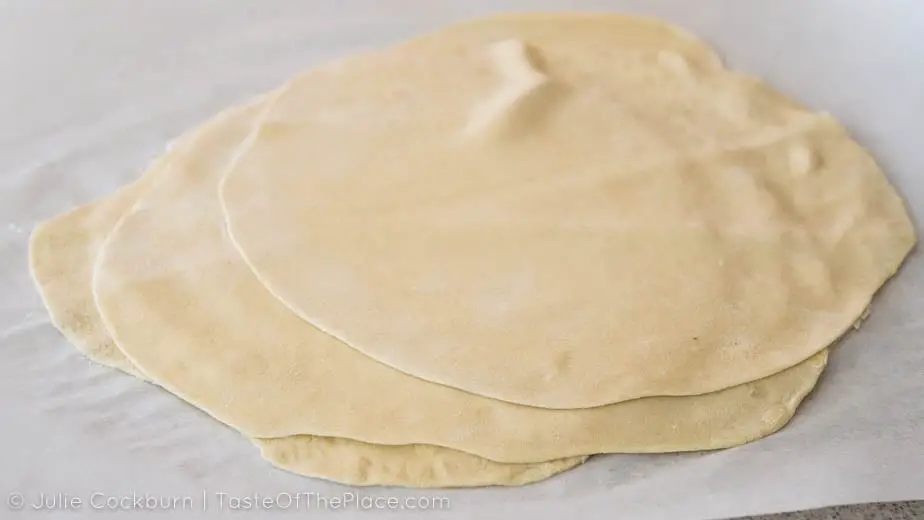
Rolled out rounds of bolani dough ready for stuffing.

Recipe tips and troubleshooting

Roll the dough thin

Aim for rounds about 8 inches across. Make them much smaller, and the dough will stay thick and chewy. Stretch them considerably larger, and they become harder to fill without tearing.

Keep unused dough covered

Cover both your dough balls and rolled rounds with a slightly damp towel while you work so they don’t dry out.

If you stack rolled dough rounds, dust them lightly with flour so they don’t stick together.

Drain the spinach well

After wilting the spinach, press out as much liquid as you reasonably can. Excess moisture makes the filling harder to contain and can leave you with a soggy flatbread.

Season the filling generously

Both potatoes and spinach can take a surprising amount of seasoning. Taste your filling before you begin assembling the bolani and adjust the salt and pepper as needed.

Don’t overfill

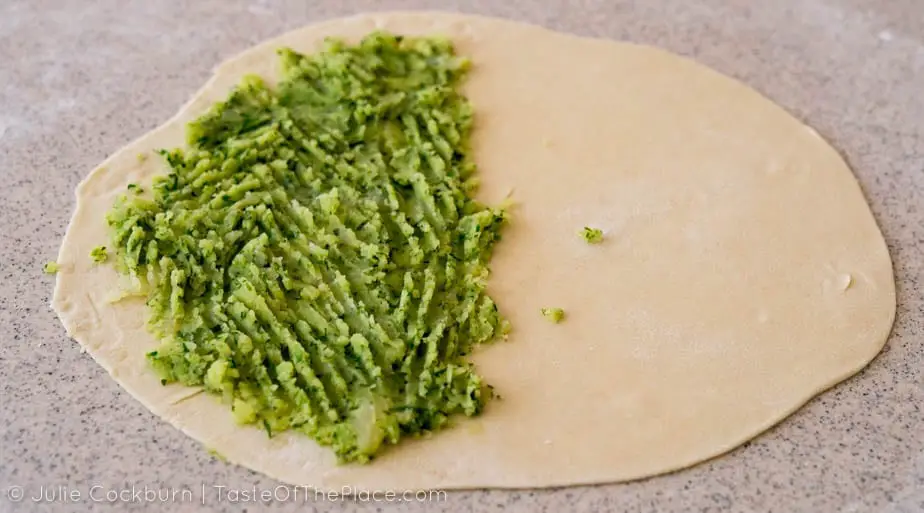
A generous 1/3 cup of filling has worked well for me. Spread it into a thin, even layer rather than piling it in the center. Too much filling makes the bolani too thick and lumpy – it becomes difficult to seal, is more likely to come apart while cooking, and can make it hard to get even contact with the skillet while cooking.

Watch your heat

You want enough heat to brown the outside while giving the dough time to cook through. If the surface is burning in spots before the dough appears cooked, reduce the heat slightly.

About 1/3 cup of stuffing on a round of bolani dough before folding.

What to serve with bolani

My first choice is the garlicky yogurt sauce included in the recipe. Fresh herb chutneys are another tasty option.

For a larger Afghan-inspired meal, serve bolani alongside Afghan Noodle Soup, or Aush.

You could also pair it with Afghan Mantu for a table filled with different Afghan dishes to share.

Or keep things simple and serve a couple of bolani with a crisp green salad for lunch.

Storage, reheating, and making bolani ahead

These are tastiest eaten right away, when the flatbread is hot, but leftovers can be stored in the refrigerator for several days.

For the best texture, reheat bolani in a lightly oiled skillet until warmed through.

You can also prepare the individual components ahead of time. Make the dough and filling, refrigerate them separately, and assemble the bolani when you’re ready to cook.

If the dough has been refrigerated, pull it out about 45 minutes before rolling so it has time to come closer to room temperature and become more pliable.

Frequently asked questions

Is bolani Afghan?

Yes. Bolani is a traditional Afghan stuffed flatbread, with different regional and family variations found throughout Afghanistan.

What is bolani filled with?

There isn’t just one filling. Bolani can be filled with potatoes, green onions or leeks, fresh herbs, spinach and other greens, legumes, pumpkin, and other savory ingredients.

This recipe includes two options: spinach and cilantro or seasoned potato.

What do you eat with bolani?

Yogurt sauces and fresh herb chutneys are especially good with bolani. This recipe includes a dipping sauce made with Greek yogurt, garlic, ground coriander seeds, and dill.

Bolani can also be served as part of a larger meal with soup, salads, or other Afghan dishes.

Why is my bolani dough chewy?

The dough may have been rolled too thick. For this recipe, aim for a thin round about 8 inches in diameter before adding the filling. The thinner dough cooks more quickly and gives you a better balance of toasty exterior, tender dough, and savory filling.

Why are the edges of my bolani undercooked?

The edges may be too thick or the stuffing too lumpy.

If you fold or roll the edges of the bolani, the dough becomes thick and can be challenging to cook through before the rest of the bolani is burned. Rather than folding the edges over, just dab them with a bit of water and press together.

If the filling is too thick or lumpy, it can be hard to maintain even contact between the cooking surface and the bolani – the middle will be in contact with the heat, but not the edges. Ensure the filling is thin and evenly dispersed. When you seal the bolani, press them down slightly to create a mostly even surface. It can also be helpful to gently press the edges down during cooking to help the entire bolani maintain contact with the heat.

Why is my bolani soggy?

A wet filling is often the culprit, particularly when making the spinach version. Drain and press as much water as possible from the wilted spinach before combining it with the other filling ingredients.

Also make sure your skillet is fully heated before you begin cooking.

Can I make bolani ahead of time?

Yes. The dough and fillings can be prepared ahead and refrigerated separately.

Bring refrigerated dough toward room temperature for about 45 minutes before rolling, filling, and cooking the bolani.

Print
clockclock iconcutlerycutlery iconflagflag iconfolderfolder iconinstagraminstagram iconpinterestpinterest iconfacebookfacebook iconprintprint iconsquaressquares iconheartheart iconheart solidheart solid icon
Stuffed Afghan Bolani

5 Stars 4 Stars 3 Stars 2 Stars 1 Star

No reviews

Afghan Bolani Recipe: Toasty Veggie-Stuffed Flatbread

Recipe by Julie A. Cockburn

Golden on the outside, tender inside, and packed with savory vegetables, Afghan bolani is a stuffed flatbread that makes it very easy to eat “just one more.”


  • Total Time1 hour 45 minutes
  • Yield6 as a side 1x
  • DietVegetarian

Ingredients

Units Scale

Yogurt sauce

  • 1 cup Greek yogurt (see notes)
  • 1 medium clove garlic, minced
  • 1/2 teaspoon ground coriander seeds
  • 1 teaspoon dried dill
  • Salt to taste
  • 2 tablespoons or more water

Dough

  • 3 cups all-purpose flour, plus extra for rolling
  • 1 teaspoon salt
  • 1 tablespoon olive oil
  • 1 cup or more water
  • 3 tablespoons oil for frying (olive oil or a neutral-flavored, high-heat oil)

Choose your filling – spinach or potato

Spinach and cilantro filling

  • 1 pound fresh spinach leaves (see notes)
  • 1 1/2 cups roughly chopped cilantro
  • 1 cup roughly chopped green onions or leeks
  • 1 jalapeño, roughly chopped (optional)
  • 1 tablespoon olive oil
  • Salt to taste
  • Freshly ground black pepper to taste

Potato filling

  • 1 pound potatoes, boiled until fork-tender, drained and peeled
  • 1 cup minced cilantro
  • 1/2 cup minced green onions or leeks
  • 1 jalapeño, minced (optional)
  • 2 tablespoons olive oil
  • Salt to taste
  • Freshly ground black pepper to taste

Instructions

Yogurt sauce

Whisk together the yogurt, garlic, coriander, dill, and a pinch of salt. Whisk in 2 tablespoons of water, adding additional water as needed to reach a smooth consistency, perfect for dipping. Taste for salt, adding more if desired. Set aside in the fridge to let the flavors combine while you prepare the bolani.

Dough

Whisk the flour, salt, and olive oil together in a large bowl. 

Use a fork or your fingers to mix in 1 cup of water. Begin to knead the dough, adding additional water a splash at a time as needed, until it comes together into a soft dough. If your dough becomes sticky, add a dusting of flour. Continue kneading until the dough is smooth, about 8 minutes.

Cover with a lightly dampened towel, and set aside to rest for at least 20 minutes while you assemble the filling.

Filling option 1: spinach and cilantro

Blanch the spinach. I like to do this by placing the spinach in a large colander in the sink and pouring boiling water over the top until the leaves are just wilted. Drain well, pressing as much extra water from the spinach as you can.

Using a food processor, pulse the cilantro, green onions, jalapeño, and 1 tablespoon olive oil a few times until the veggies are finely minced. Add the spinach to the food processor, a couple of handfuls at a time, and pulse until everything is minced and well combined.

Mix in salt and freshly ground pepper to taste. Don’t be shy here – spinach can be quite bland without enough seasoning. 

If your mixture seems really wet, place it in a colander to drain while you roll out the dough.

Filling option 2: potato

In a large bowl, mash the potatoes so they are mostly smooth, with only a few small chunks remaining. Stir in the cilantro, green onions, jalapeño, and olive oil. Add salt and pepper to taste. Don’t be shy with the seasoning – not using enough will leave the filling bland. Mix well so every bite will get some of the tasty herbs.

Put the bolani together

Divide the dough into 6 equal pieces.

On a lightly floured work surface, roll each piece into a thin round about 8 inches across. Keep covered under a slightly damp towel until ready to stuff. If you stack your dough rounds while working, be sure they are dusted with flour, or they’ll tend to stick together.

Working on a lightly floured surface, spread a generous 1/3 cup of filling on half of each round, leaving a border along the edge for sealing. Dampen the edge with a bit of water to help it seal. Fold the dough over, making a half-circle shape, and gently press the surface to even out the filling and remove any big air pockets or lumps. Press the edges together to seal. Set aside on a lightly floured surface until ready to fry. If it will be more than a few minutes until frying, cover with a slightly damp towel.

Heat a 10-inch skillet or a griddle over medium heat. You’ll know it’s hot enough when a drop of water dances and sizzles across the surface. Generously brush one side of one bolani with some of the oil. Place oil-side down on the hot skillet and fry until golden brown. It can be helpful to gently press the edges down with a spatula to ensure even contact with the heat. Brush the second side with oil, flip, and cook until golden brown and delicious on the second side. Set aside, lightly covered with foil or a towel to keep warm, and repeat with the remaining bolani.

Serve hot, with yogurt sauce on the side.

Notes

No Greek yogurt? You can use plain yogurt instead. Mix in the garlic, herbs, and spices, and add water only if the mixture is too thick. 

Don’t want to deal with wilting fresh spinach? Substitute thawed and well-drained frozen spinach.

These filling suggestions are just the beginning! Stuff your bolani with whatever suits your fancy.

  • Prep Time: 1 hour 15 minutes
  • Cook Time: 30 minutes
  • Category: Side Dish
  • Method: Frying
  • Cuisine: Afghan
Recipe Card powered byTasty Recipes

Ready to explore more Afghan food?

If you enjoyed making bolani, try another Afghan favorite next:

Afghan Mantu dumplings

Afghan Mantu – savory beef & onion filled dumplings

Afghan Mantu are savory steamed dumplings that make a wonderful addition to a shared Afghan-inspired meal.

Afghan Aush beef and noodle soup

Afghan Noodle Soup, also known as Aush

Afghan Noodle Soup, or Aush, is a hearty, comforting soup filled with noodles, legumes, herbs, and loads of flavor.


Enjoy recipes and food stories from Taste Of The Place?

Comments

Leave a Reply

Your email address will not be published. Required fields are marked *

Recipe rating 5 Stars 4 Stars 3 Stars 2 Stars 1 Star

Comments will be held for moderation. Any low-value, spammy, or mean-spirited comments will not be published. Thanks for stopping by and saying hello!

Hi! I’m Julie

Julie Cockburn with the Taste Of The Place cookbook

I’m so glad you stopped by! 

Taste Of The Place is where I share my love of all things international food and culinary travel. 

Enjoy the journey!

Take a Food Journey Around the World!
WP Tasty plug in suite promo ad